
I posted one piece of content.
Someone in the US 🇺🇸 booked a one-on-one coaching call.
They didn’t ask for my CV. They didn’t ask where I studied. They didn’t ask how long I’d been doing this.
They opened one link and asked one question:
“How did you build that?”
That was basically it.
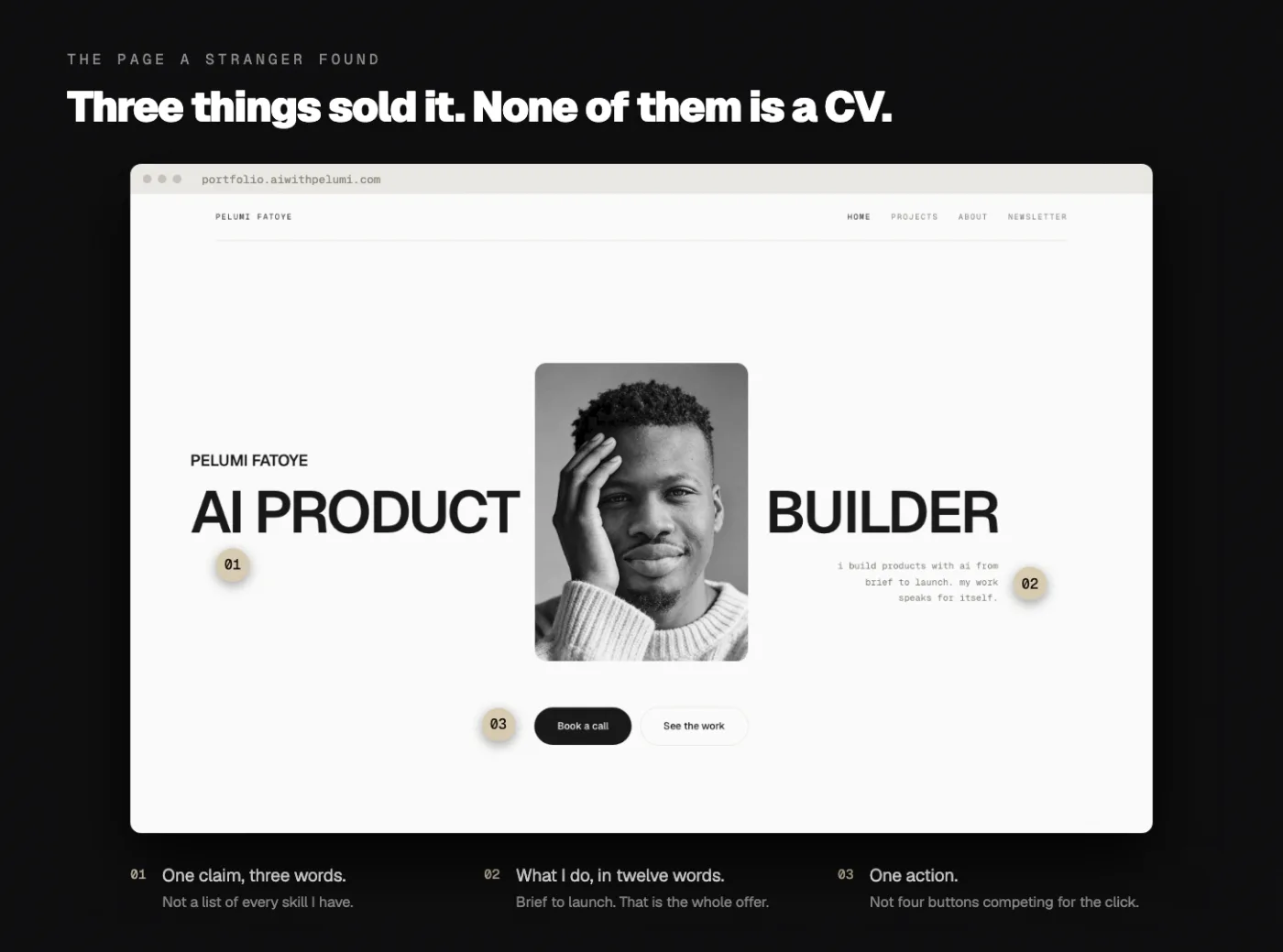
Here’s the part I have to say out loud, because everything below depends on it.
I’m not a developer.
I can’t write React from memory. I couldn’t pass a coding interview.
What I can do is describe a thing precisely enough that the model builds the right version, then catch it fast when it builds the wrong one.
That second half is the bit I wish someone had taught me.
So here is the full hour I walked them through, with my screen.
Two things before we start:
Save this. It’s long. Put 30 minutes in your calendar and do each step as you read it, rather than reading it all now and doing none of it.
Send it to the person who keeps telling you they’d build something if only they could code.
This newsletter is free because people like you send it to people they like.
1. Write the brief before you open the editor.
Most people open the editor first. Then they ask AI to build a website. Then they wonder why it looks like every other website.
I thought the editor was the hard part. It turned out the brief mattered more.
Answer four questions in plain language, in any notes app:
Who is this for?
What is the one thing I want them to do?
What proof do I have that I can do it?
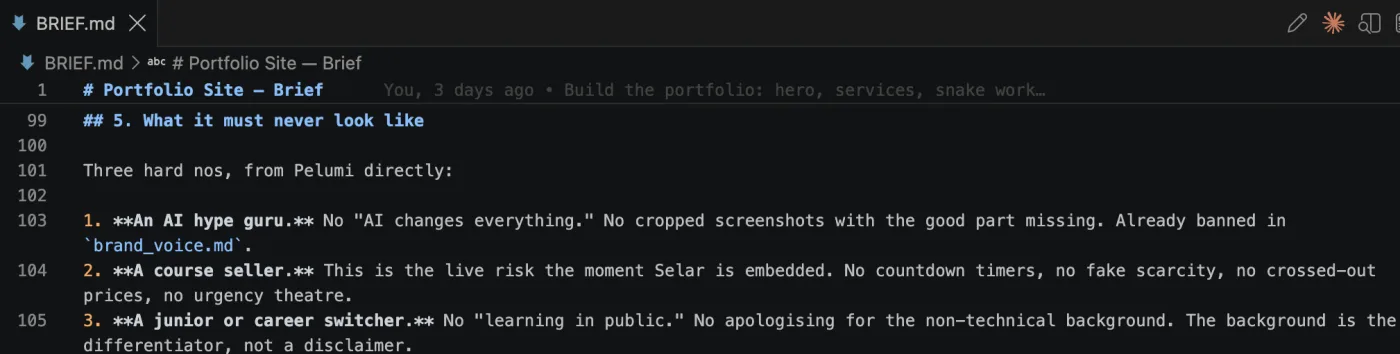
What should this never look like?
For me, the fourth question ended up doing most of the work.
Mine was: never an AI hype guru, never a course seller.
One line. It killed a dozen bad decisions before I made them. Every time the model offered me a countdown timer or a “limited spots” banner, I already knew the answer was no.
2. Give it the brief, not a wish
Here is the difference between the two prompts, side by side.
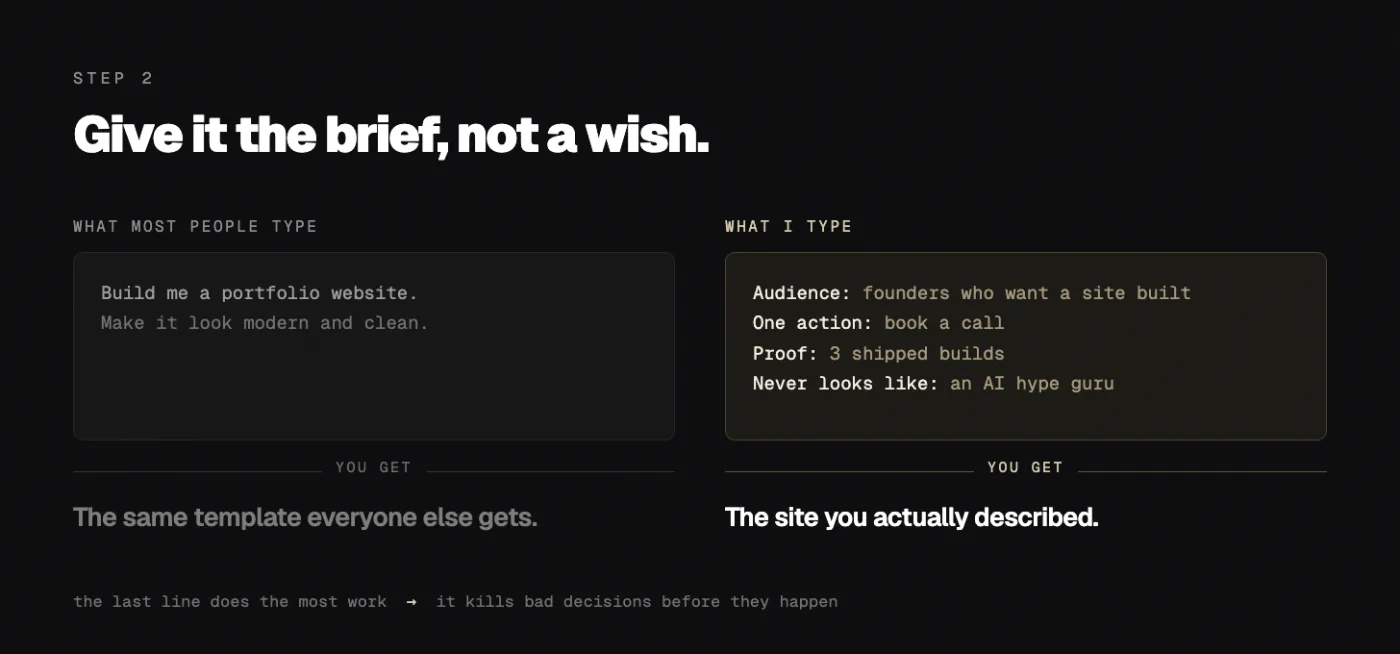
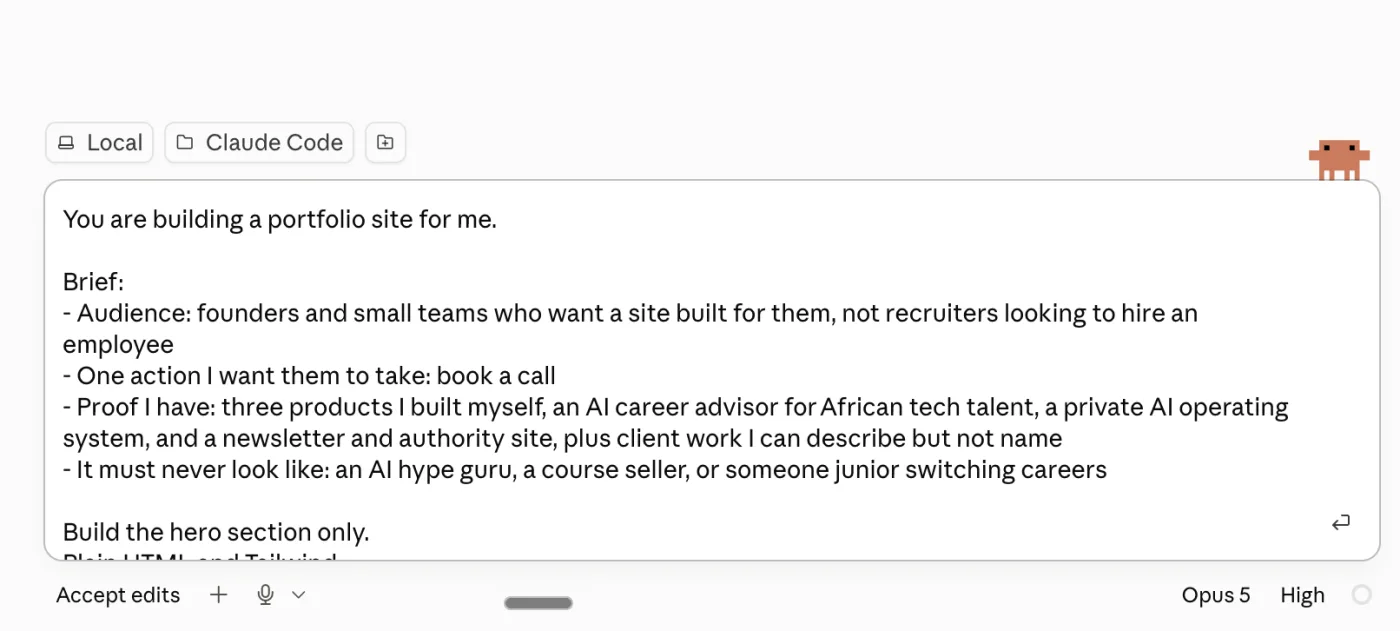
This is the prompt I actually use. Copy it, fill in the brackets with your four answers from step 1:
You are building a portfolio site for me.
Brief:
- Audience: [who]
- One action I want them to take: [what]
- Proof I have: [list]
- It must never look like: [list]

Build the hero section only.
Plain HTML and Tailwind.
No placeholder lorem ipsum. Use my real copy below.
Before you write code, tell me in 3 lines what you're going to build and why.
Wait for my yes.
That last instruction stopped me wasting time on the wrong version.
Without it, the model writes 200 lines and you find out at the end that it misunderstood you. With it, you find out in three lines and fix it in one sentence.
Notice I asked for the hero section only. Not the site. It feels slower at first, but it saved me a lot of rework.
3. Reject the first output on purpose
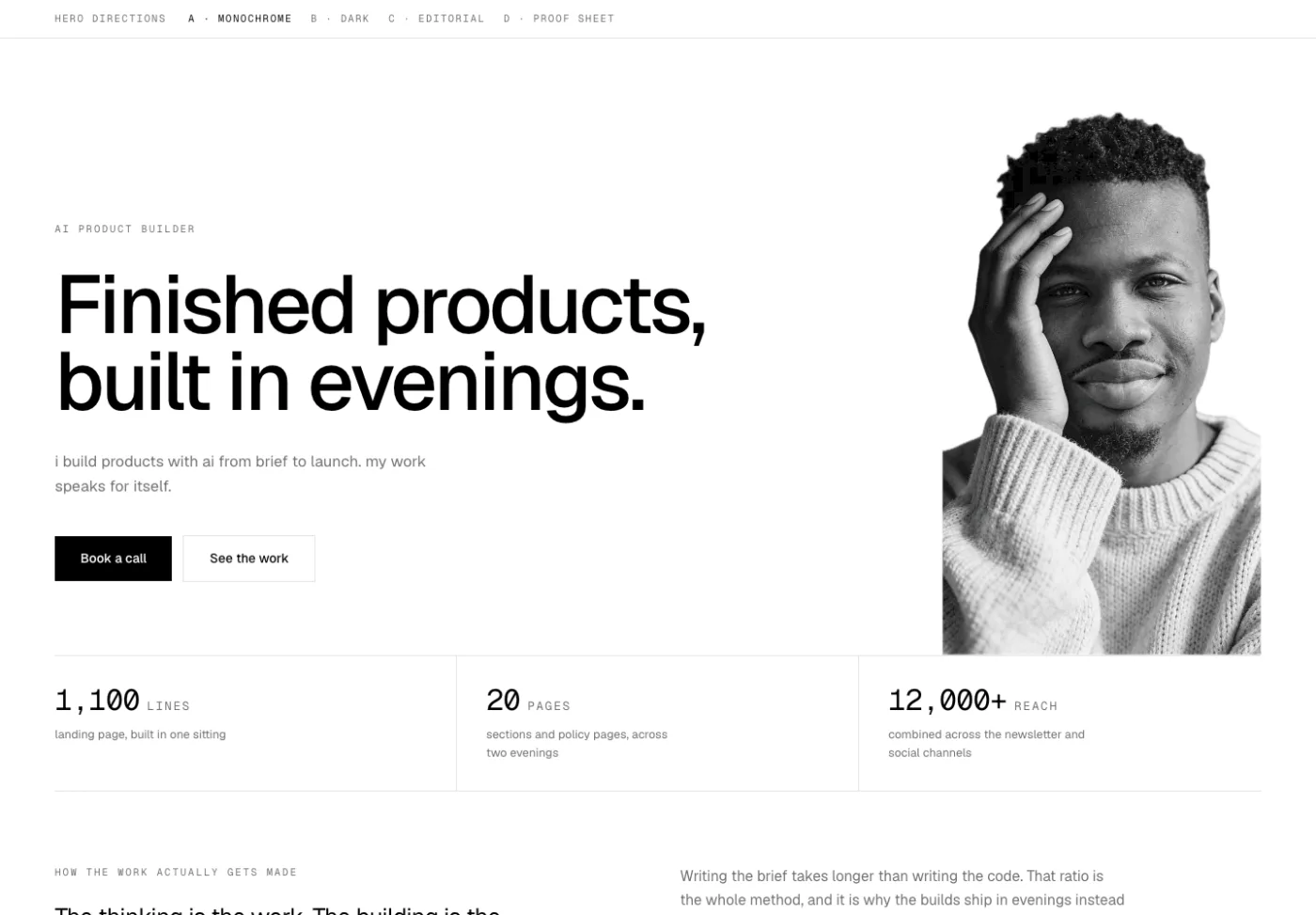
My first version usually comes back generic.
A safe hero. Three benefit bullets. A gradient. It looks like a SaaS company that sells nothing in particular.
That’s normally the point where I used to give up. It’s only the first round.
You are one round in.
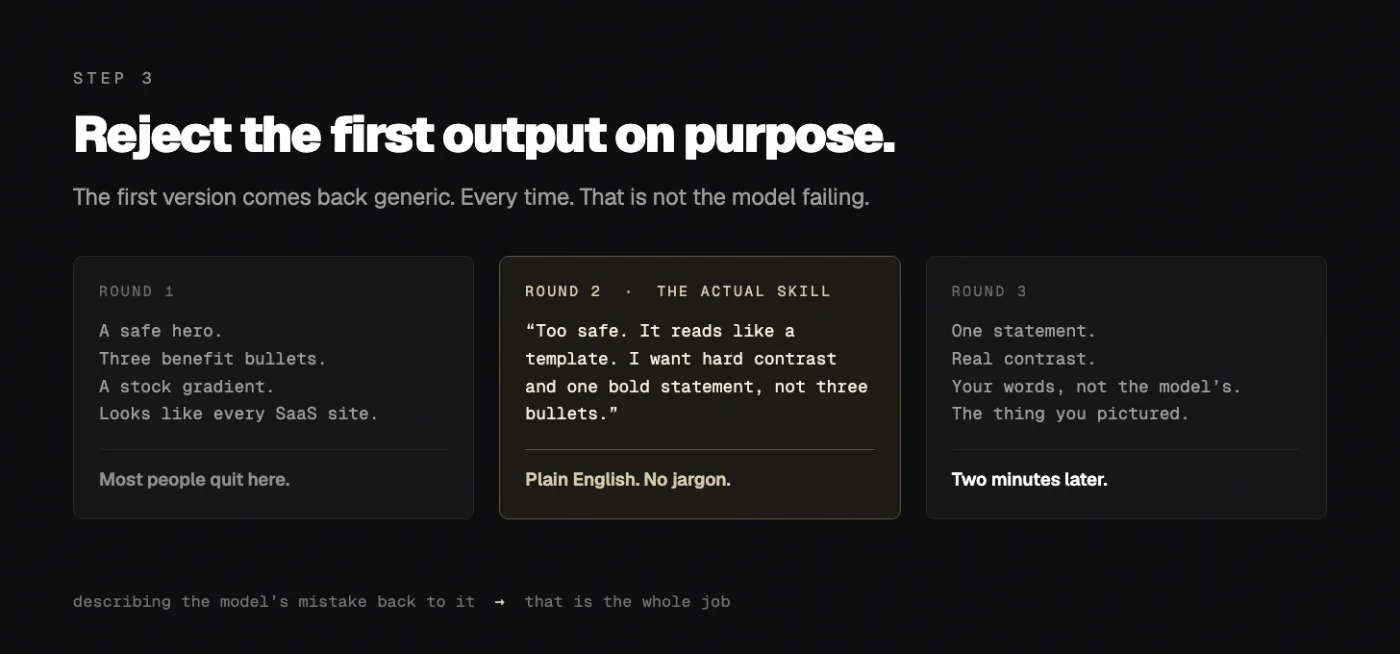
So you say why it’s wrong. In plain English. Like this:
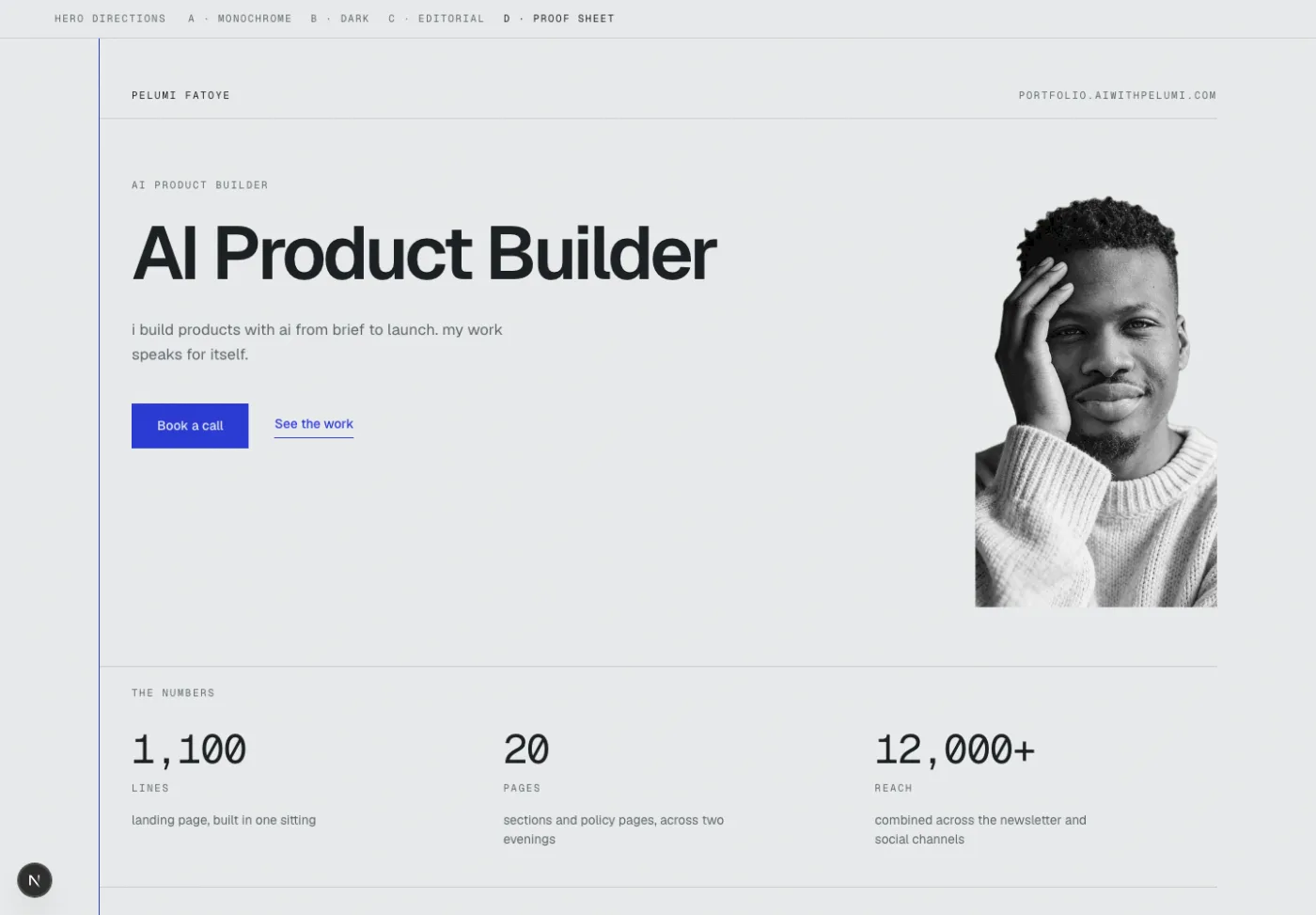
“Too safe. It reads like a template. I want hard contrast and one bold statement, not three benefit bullets. Lose the gradient.”
No jargon. No design vocabulary. You’re talking to it the way you’d talk to a designer who showed you something you didn’t like.
4. Keep every word of copy in one file.
Every word on my site lives in a single file called content.ts.
Not in the code. Not scattered across twelve components. One file.
Which means when I want to rewrite my headline, I open one file and change one line. I never touch the layout, so I can never break it.
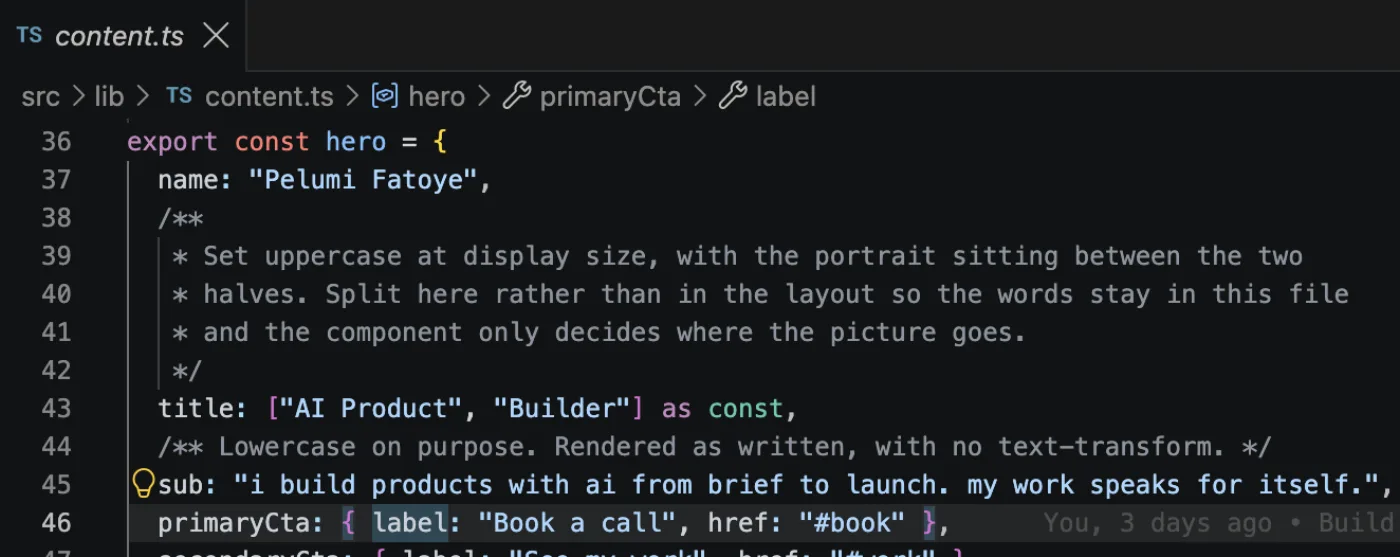
It means I can change a headline without hunting through the site and breaking something.
5. Ship at 80%.
My site went live before I was happy with it.
The spacing was off. Two sections I’d planned weren’t built. I had a placeholder where a case study should be.
The person who booked me found it in exactly that state.
Mine was visibly unfinished when the person who booked me found it.
What they said at the end.
By the end of the call they had their own site running.
Then they told me the thing that made me write this.
They had watched dozens of videos about building with AI. Every one told them it was possible. Not one of them showed their screen.
That’s the gap.
Almost everything in this space stops at “AI can build your website now.” True, but it didn’t help me when I was staring at a broken layout.
Nobody sits with you in the ugly middle part, where the layout is broken and you can’t work out what to say next.
That middle part is the part I needed help with.
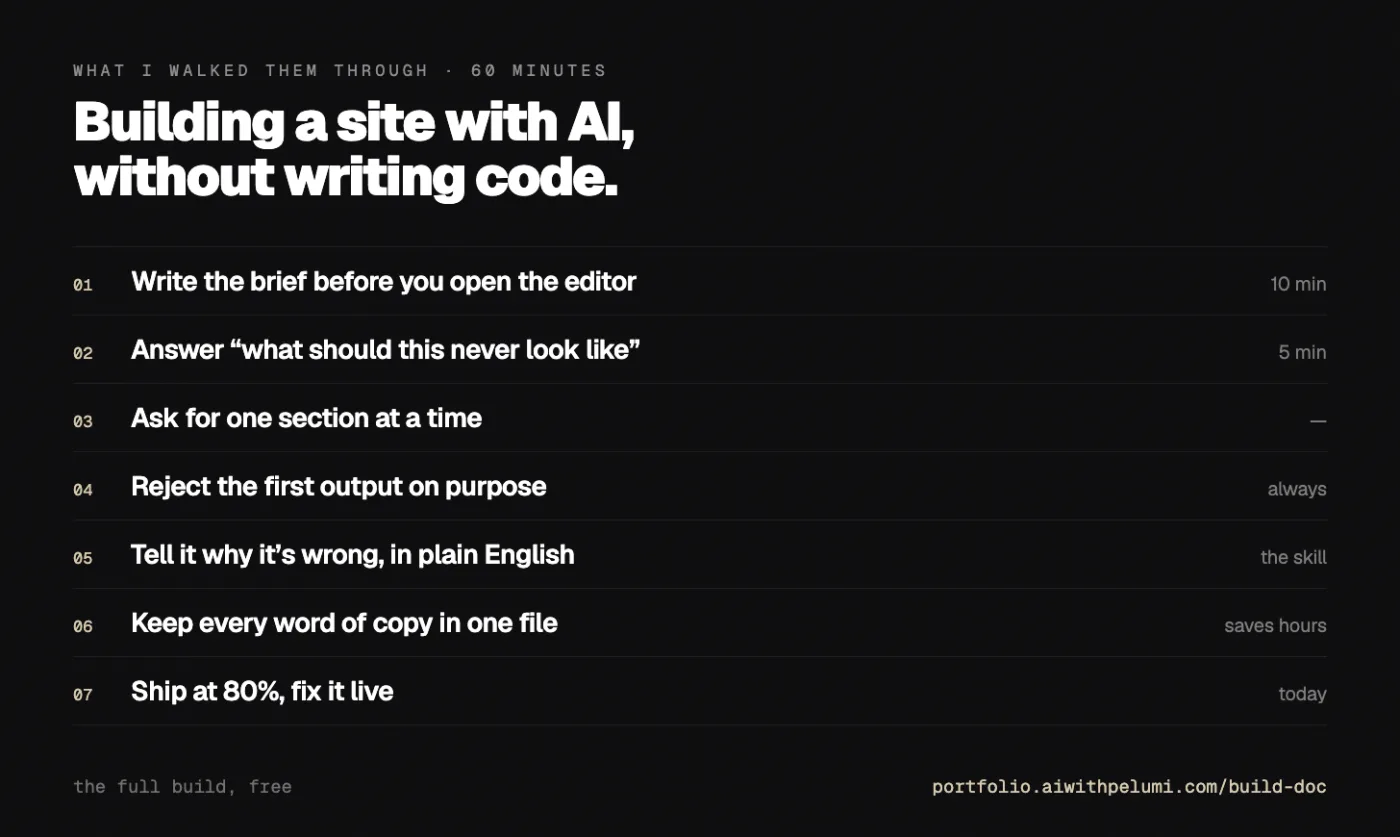
Go do this today.
Open one project. Write the brief before you write the prompt. Reject the first output.
That’s it. That single reorder is most of the difference between a site that looks like everyone’s and a site that looks like yours.
I wrote down the entire build of my own site, free:
Run it, then reply and tell me which step broke for you. Whichever step breaks for the most people is the next thing I write.
Pelumi